Imitations of Life
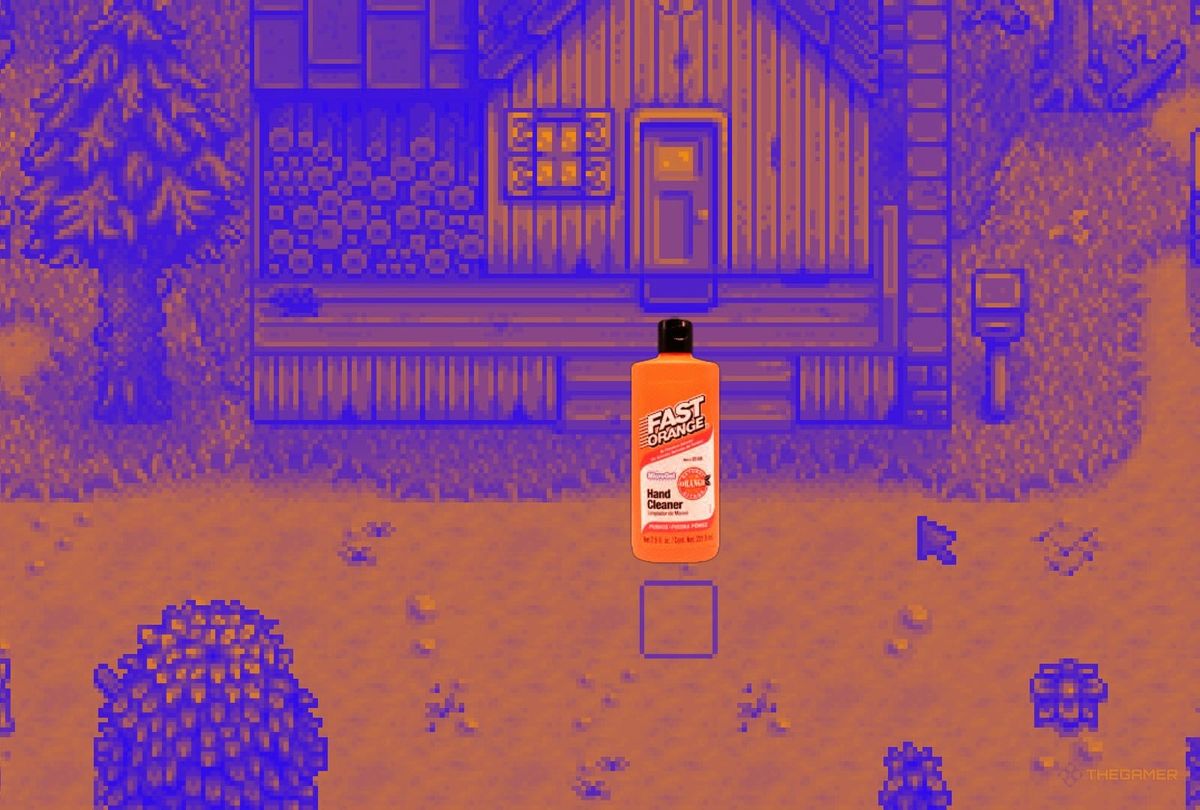
There’s a special kind of soap for hands that perform the kind of labour where dirt and grime and things soak into the skin. Fast Orange, as it's called, comes in an orange bottle, and smells accordingly of sweet and bitter citrus. And you would be right to question the soap marketing industrial complex, as I believe most soap is doing the same one dollar task with five dollar words, but Fast Orange is something different. I hate to tell you that it really works, but it does, and every so often the bottle even comes with a little scrub brush for the grime that gets below your fingernails, or is baked into the skin after a long day. It is there to scrape the day's labour from your skin, to leave you clean enough to rest and wait for it all to come back again.
There was a time when a bottle of Working Hands lived on the counter in my bathroom. There was a time when my hands would take multiple washes to come clean at the end of the day, where the water in the sink would run red and deep black before eventually turning clear, as if I was blanching potatoes buried in red clay. That day is long behind me, and the soap in my bathroom has changed in step. The body wash in my shower smells like lavender and the idea of coconuts, and the artisanal bar next to the sink a collection of implacable aromas and familiar scents. Everything is sweeter, but not of bitter citrus, and softer. My hands have changed their needs by way of the work they perform, and typing doesn’t elicit the same demands as labour, and so Working Hands is an artifact of a past life.
My dad would call what I now do for work “soft hands work”, which is to say my skin is never rough and worn by the end of the day. By virtue of that, you could say my life is cozier now, as the soap that cleans me runs clear at first blanch, and smells of lavender and simulated coconuts. The word cozy could apply, only I don’t like it. I don’t like its relationship to life and labour, how it shades everything in pastel and soft tones. Cozy as a descriptor of something precious and hushed, as if the edges are removed and the blade made of clouds and softer things.
There is a kind of video game that is branded as Cozy, and it is always about work. Where the platonic notion of a video game is one of violence and loud noise, there is, in fact, a world beyond all this. There are games that are never about violence at all. Some are about running a coffee shop, or dating. In some, you build a city, and in others you maintain the lives of those who would live in the simulated buildings placed gently in neighbourhoods of wild fabrication. And there are games where you work, and labour through the day.
This was heightened during the first few years of the COVID-19 pandemic, where Animal Crossing was suddenly a game a generalized sense of everyone was playing on the Nintendo Switch. In it, you build houses and pull weeds on an imaginary island populated by a revolving cast of increasingly bizarre human-adjacent animals, each with their own anxieties and desperate dreams. Your job, as the only human on the island, was to work and build, so that all could live in relative comfort. Your job was to break rocks, and chop trees, pull weeds, remove stumps, fill holes. Build bridges. Build furniture for homes of iron and well-milled lumber. This was a cozy game, and at the end of each imagined day it’s true that my hands ran clear in the water, but it always felt cheap. Like the labour was never considered, and so the softness of my hands felt unearned.
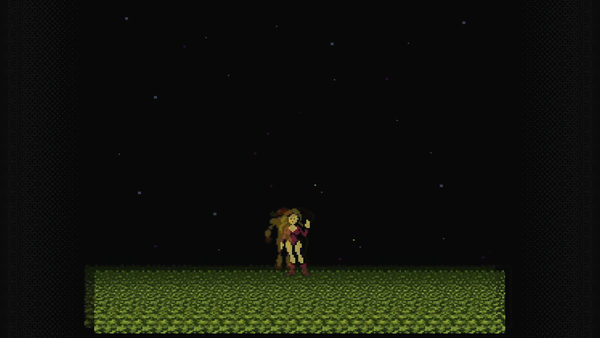
I have started a new farm in Stardew Valley, which is something I do at least once a year. I will become obsessed with for at least a month before forgetting about it entirely. Like Animal Crossing, Stardew Valley is a labour simulator dressed up for comfort. In it, you are a lapsed office drone, whose grandfather dies and leaves you his farm and attached acreage in the fictional village of Stardew Valley. When you arrive, you are shown your home, the field that lays at its feet, and told that the land is yours to work. You plant your first crop (Turnips) by working the land; tilling the soil, clearing loose pieces of debris and rocks, planting the seeds, and watering them. Each day these steps are repeated, until your turnips or what have you are ready to be picked and sold at auction.
This is not your only task. Before too long you are chopping down trees, and bigger trees, and breaking rocks. You are rebuilding a dilapidated community centre, you are fishing in the ocean, or maybe the river that runs down from the mountains. You are raising chickens, and cows, and pigs. Turning their eggs into mayonnaise, their milk into cheese. Picking the truffles found in the dirt by your loyal swine.
If you have time, you are mingling with the other citizens of this isolated village, removed from the world where your avatar once droned lifelessly away behind a computer. Here, in the valley, you’re a farmer, and it is a noble and simple life. You can meet at the tavern for drinks, or to play the two operational arcade machines off by the pool table. You can become friends, and closer friends, with any number of hot singles in your area. You are all in a shared area. You can attend the flower dance in the forest that is meant to be wholesome and instead gives off an air of something darker lurking in the history of this far away place. Perhaps once, when the dance was done, the blood of someone here was offered to an unseen God, and the dance is all that remains of a fading dalliance with sinister forces. Then the dancing is done, and so is the day, and when you sleep you wake up once more to do it all again. Not the dancing, but the work. The tilling and the watering, the turning of eggs into mayonnaise, the breaking of rocks and the exhausted flirtations at the bar late into the night, maybe just before some night fishing down by the ocean. This is a Cozy Game, filled with exhaustive tasks.
I know it’s cozy because it is branded as such, and there are influencers far and away that list it as one of many. It’s a place of comfort, perhaps because it’s removed from the brash violence of other titles, and is considered something safer and softer than the rest. The labour of it is less important than the world it creates, and the perceived simple pleasures of farming life imagine a world where labour is simple, and simply rewarding. Who wouldn’t want to wake every day in a home that they own by blood, work their soft soil, pluck their food, mingle with their pets and animals, and work with dedicated purpose to build great monuments of an ideal life. Each day, if you’re doing it right, money comes in with compounding interest, building a cache of a livable wage by the simple work done in the course of a simulated day.
It is a flat idea of a farmer, labour drawn in pixels because it is a video game before it is anything, and it feels far removed from my mom telling me stories about the farm she was raised on. It’s never supposed to be real, but it simulates reality all the same. It is not that I don’t appreciate the game making space for labour, it’s that the work has been co-opted and turned into something it will never be. It is a cozy game where the goal is to work exhaustive hours, and I wonder if anyone who makes hushed-tone videos draped in clouds of pastel colours ever asks themselves how hard it would be to work the fields of the land given to them. I wonder if they have ever washed their hands once, and then twice, to get the grim and oil off them so that they might not hold the sweat of the day in their pores when it's time to eat, or to lie on the floor and hope that its hard cold surface could realign the muscles in their back.
What we call cozy becomes gamified labour, and it is cheapened by being turned into perceived comfort. Or rather, the source of comfort is misaligned. The caricature of the noble working class, how nice and calming it would be to only have to wake and work, to mingle with your fellows and have them all delight in your collective struggles. What is of comfort, perhaps, is the idea that by working with a collective goal in mind — the rebuilding of a community centre, the financial commitment to support local workers, their farms and their labour — we are all made better. The tavern more lively when the people within its walls are afforded a better life. That the work is hard, but it is rewarding, and the people who perform labour deserve to be considered as equals to any whose work comes from money and education.
On the internet, I see people post threads complaining about the work men are doing on their building, or in the streets near them. The complaints are always understandable in their own way. It’s hard to hear the sounds of drilling, and hammering, and the reverberations of noise that is often painful. I never see consideration for the men doing the work. They are only ever a burden, they are a hinderance. They are working long and annoying hours outside, doing tasks that no one can claim understanding of. There is rarely space for them, how they are up and at work with tools in hand by 8 am, they are outside with the sun at their backs and on their faces for hours that bleed into each other. They are loud because they have to be, their own hearing damaged by the sound of their tools, their hands turned dark by dirt and oil and the day. They are working to ensure the buildings and streets are better, so that we all might be better. They are working to create the conditions in which we all might experience comfort.
This kind of labour is appreciated only from a distance, safe from the roughness of its skin. It’s appreciated when it can be discussed or theorized or performed with buttons on a screen, but less when it has to be perceived and lived in. This is where I bristle against the idea of the cozy game, how simple it makes acting out the rhythm of work and toil. How it buffs away the scars and dings work puts on the body, and erases the precarious conditions faced by working people. How it simplifies the idea of the farmer as a noble hand reaching into the soil to pull food from its roots. To say nothing of the people who are often forced to work under duress or in inhuman conditions to pick the food that sustains us. Cozy games are simulations of labour without need of any offering of the body.
You can argue of course that these are just video games. They are simple entertainment, and I am overthinking it. This is very true. I love these games same as anyone, and it’s just that I brush up against the labelling of these things as cozy. I think we have run too deep into needing cozy and comfort where there is work to be done, and like all things it's an opportunity to consider that there is something more to imagine. That these games are about work, the kind we could do together to live and sustain our lives, our communities, our people. That isn't cozy, but rather it's comforting in its way to be building something.
I started my new farm in Stardew Valley, and two days later my upper back seized entirely. Not from pushing buttons to strike the earth with an iron hoe, but because for almost two decade my days were spent lifting, and cutting, and drilling, and bleeding, and going to the hospital for bleeding, and then more work. My days were long and hard, and they have caused chronic pain that I will suffer the rest of my life. Doctors have told me the pain I experience might well always be the pain in my body. Right now, as I type, I can feel it. Sometimes when my lower back tweaks, my left leg goes a little numb and becomes hard to walk on. This is the price of hard and demanding labour, and you would never imagine my former life as cozy. No one looked at me, tired and struggling to get through the day, and imagined me draped in pastels and smelling of lavender. Their hands never smelling of citrus that stripped the day from their bones, the cozy comfort of never having known labour at all. They saw my sweat, and the dirt on my hands, and thanked whatever God they offer blood to that my life was not theirs.
If you live in Toronto, my music doc screening series Jukesdocs is showing the Courtney Barnett documentary Anonymous Club this Saturday, May 16! Tickets can be found at HotDocs.
I wrote about "God Only Knows" for Paste Magazine as part of their series on Pet Sounds, you can read that here.