Memory Tape
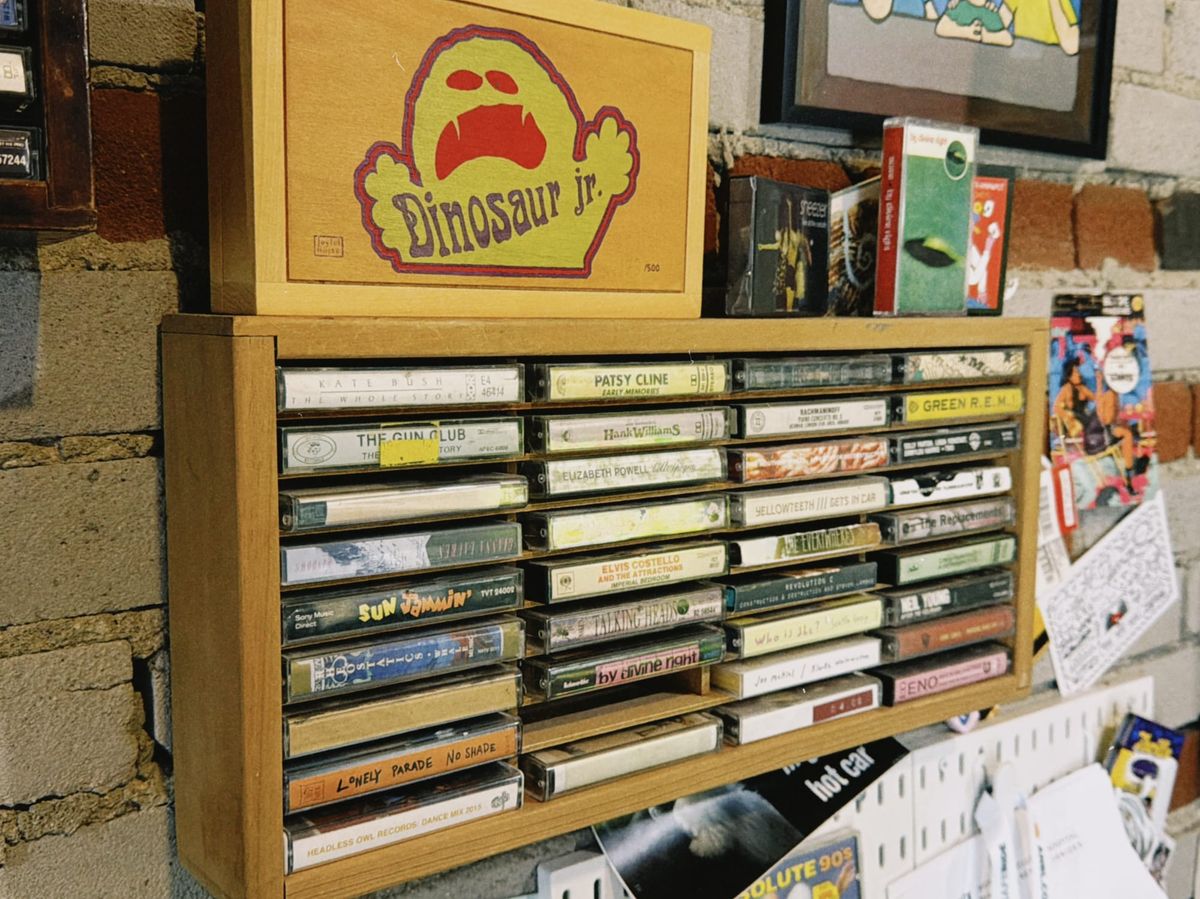
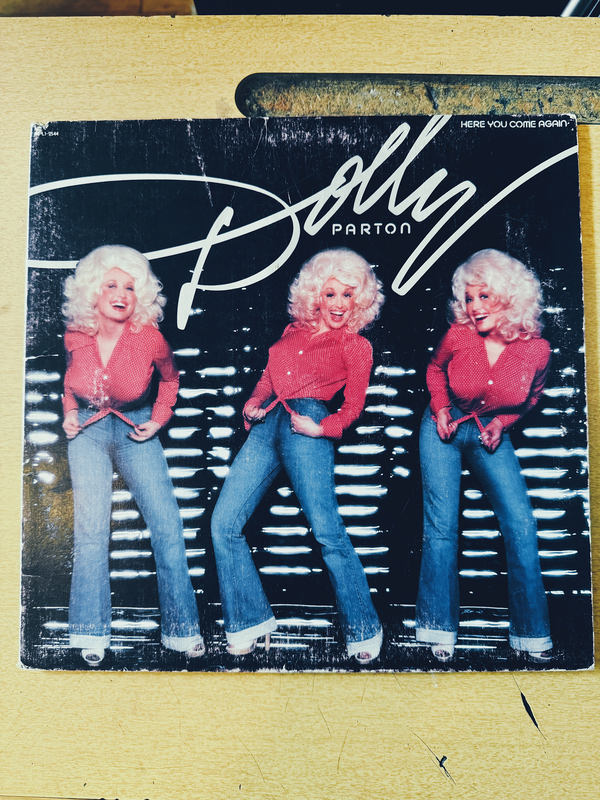
When I was a kid, my sister and I raided the remains of my parent's once lavish record collection. My dad’s records had his name written on them, although sometimes they were crossed off and rewritten by his brother in a bout of playful sibling thievery. His were records by bands like Dan Hicks & his Hot Licks, and The Ozark Mountain Daredevils. My moms records were the Emmylou Harris albums, and the other good ones. They didn’t really listen to them anymore, though they had a turntable and a stereo to connect it to. The cumbersome format no longer seemed to hold much sway for them. They had lived their vinyl years, and shifted to CDs when technology and longboxes urged them to move on. And so my sister and I took them, and built memories from the remains of their former glories.
We loved them because they were exciting artifacts, old and unknown to us like treasures from some long forgotten age, and so we played my parent's old records as often as we could. We chose our favourites, Thriller, and Bridge Over Trouble Water for regular rotations in our living room, the sun glaring upon our feet through the window as we delighted at what music we had conjured simply by dropping a needle on a swirling disc. We paired these with Culture Club and Loverboy records neither of our parents would admit to ever having purchased. They became part of our lives, each rotation on the table a memory of our shared days carved into the wax by a waning needle.
As we got older, the records remained in the living room, though we didn’t really listen to them anymore. The small collection of our parent's past had become ours too, leaning against the wall and out of the sun. Like the old photographs that lived in a box buried in the back of my mom’s closet. Memories that laid on the ground, and waited to be rediscovered.
Later in our lives, when I was working at the glass shop, and my sister was home for the summer from university, the records were there still. As if our youth and its perfect memories had been waiting for her to return. She would play Loverboy’s “Working For The Weekend” on Friday mornings to playfully taunt me. When I came home for lunch, and she could hear the crunch of my tires on the gravel of our driveway, my sister would hold the needle over the lead groove on side A of Thriller. She would eventually get so good at finding that first second of “Beat It”, and could time the needle drop for the precise second I opened the door. When that first synthetic gong hit perfectly as I walked through the door, I was greeted by her uproarious, triumphant laughter. Hey infectious joy mixed in among the gongs and inbound rhythm.
The kids are buying Walkmen now, and the market is responding by selling recreations of the 90s to market at 2026 prices. The kids, in this sense, is not meant to be a pejorative, though I understand it will read that way. I mean Kids as a loose collective to make a point, referring to anyone young enough to have not been alive in the heyday of the portable cassette player. Really, it’s anyone who wasn’t alive when Kurt Cobain died, which translates to roughly 30 years old at this point, as time reminds us of its grim commitment to its endless labour. The Discman — briefly known as the CD Walkman, a whimsical if not impossibly long name — gained traction in the mid-90s, and became ubiquitous by the end of the decade/millennium before falling from the light of grace as the MiniDisc and the MP3 player became the last to hold the torch of personal music ownership.
There are those who are annoyed at this, as they’ve always held on to their Walkmen, their tapes, their CDs, and MiniDiscs. This is their lifestyle, not a trend, and they are already warmed by the light of their own sterling spotlights. I want to say that I’m happy for you, and that this isn’t about you. It is, in fact, about the opposite of you, and here I think we find a bit of an eternal problem. Being so protective of our relationship to the past to feel some distance from the present. It’s certainly nice to recall lost eras as perfect capsules of time, where everything was better or at least different enough to be perceived as such. Let us suffer no worries or troubles, we have salvation in our walkmen and their analogue batteries. Never mind the truth of these eras, the 90s and the days before and after are years often cast in imperfect light as moments in time when we were a proper society. That’s not true for all, and you only need to engage with the culture of the time with eyes open enough to see the hardships and downfalls for many. But still, I understand the desire to glamorize it, and hold the past as indelible proof of a better time.
This is to say that there are memories of the past, and there are artifacts of it, and they are never as perfect as we would like them to be. I have so many, my sister playing “Beat It” when I walked in the door, and the sound of her laughter in the kitchen. But these memories betray the truth of so many other moments, only because it’s easier to cast light on the idyllic minutes of the day and let the hard ones languish in shadow.
It makes sense that the kids (30-year-olds) would be getting into the Walkman. The Walkman provides you with something tangible you can own and hold and lay the skin of a life over. It only asks that you organize your listening habits around a bulky and singularly focused thing. It isn’t an easily lost SD card that holds the truth of the world in its gold plating. Walkmen were cumbersome beasts of burden that lived by the strength of value-packs of AA batteries, that could clip to your belt for as long as the clip worked, or fill the pocket of your jackets. Pockets have gotten smaller, I’ve noticed, and I imagine that’s because of the shrinking of technology. We don’t have to carry Walkmans and CD Walkmans anymore, and so the pocket industrial complex has responded in kind. Who needs all this space when we no longer own anything we’re able to hold.
The first album I ever owned, that belonged to me and wasn’t simply handed down or borrowed indefinitely from my sister, was Dookie on cassette. I had tapes before that, but they were not mine, and it’s remarkable that someone with an unreliable long-term memory can remember this. I believe it’s important that I do. I would borrow tapes from my sister, who was older and cooler than me, and when you have an older/cooler sibling you borrow and steal to emulate the enviable parts of them. Let the taste that defines their world imprint on yours, while you learn what insulates the walls of your own evolving structure.
I borrowed the tapes boys made for my sister so that I could learn about them, and I could maybe learn about the emotions they professed to her, that often never went anywhere at all but didn’t seem to matter. Everyone felt something, and so I listened and learned. I heard “Professor Booty” by the Beastie Boys, although not the whole song, as the tape ran out before the song was through. I heard “Be With You” by Mr. Big, and imagined ever feeling something so monstrous as love. I had yet to learn how quickly earnestness becomes unbearable, though that would come with time.
My earliest relationships with music were because of my parent's records, or my sister’s tapes, and I learned to love things through them and tied memories to the strings of their ringing chords. My sister playing Elastica loud enough that it masked her conversations in her room when she still lived at home. The phone cord pulled underneath her closed door. My mom playing Dwight Yoakam in the kitchen while she made scones fresh in the morning. My dad playing Gordon Lightfoot in his headphones while he slept beneath an open book on the floor. These memories swirl around hard years and challenging memories, and they are life rafts for waters that dared me to sink.
I wonder then if part of what is driving this new love for old things is a desire for these same pieces of emotional flotsam. To tether what memories will be built in these new hard years to something that will dance joyfully on the surface, and give new and eager hearts something to hold on to. There is something to be said about analog, and the way things used to be, that gives us this.
I know the argument about people wanting to own things because the concept of owning anything at all has been taken away from us. Everything is a subscription now, everything is streaming and online and ethereal. Everything is nothing at all. Last week, Hanif Abdurraqib wrote a beautiful essay in The New Yorker about this whole thing, and the comments were flooded by people yelling an answer to a question no one really asked. I suppose I understand where this is coming from, though I'm exhausted by the performance of it. The outrage and incessant vitriol that leads every conversation, even those seeking something beautiful.
We have robbed new generations of their own physical artifacts, things they can hold and claim as their own, and I understand feeling mad about this. They have nothing new that is uniquely their own to feel playfully smug about still owning in the years after it has become obsolete. Nothing unique to them that their children can find and form memories around. The Walkman is a now ancient piece of technology, long thought buried, unearthed by new and eager explorers of a world they never knew. Desperate for something physical and real to pour all the lingering remains of their souls into so that they might survive the hardships of the day and be recalled as perfect memories. Capsules and recollections for when we are far enough beyond these new and desperate times that it feels safe to be nostalgic about them.