An empty bit of good.
Let the machine work and drain and sputter and purge, may we dance and clap at what meagre pleasures it can conjure.
I want to have something more nuanced than “I fucking hate this” to say, as if there is some perfect intro that might ease my mind as I work through anxious thoughts, but it really is just so simple sometimes. In recent days I have read multiple disappointing pieces about an unknown-to-me musician who used generative AI in his songs. Despite the heavy insistence from the journalists who wrote these pieces that they don’t believe in the ethical merits of AI, they are surprised to find that the song is good. I fucking hate this.
Which is to say that I think we’re focused on the wrong fucking thing. The question of quality, as the goal posts continue to shift on how the larger media writes and thinks about generative AI. The idea that a listener is surprised that a song might be good when made in part by an AI program like Suno, an extremely controversial generative AI program that is the source of a lawsuit by the RIAA, and has been found to be scrapping data from sources like YouTube to train its model for use. A homunculus of blood and sweat, granted life by the countless hours of others’ labour. A capitalist machine eyeing the end zone of an industry that has long sought to purge itself of human interest entirely. If they can convince you a song produced by such a beast is good, then what use is there for any of us? Let the machine work and drain and sputter and purge, may we dance and clap at what meagre pleasures it can conjure.
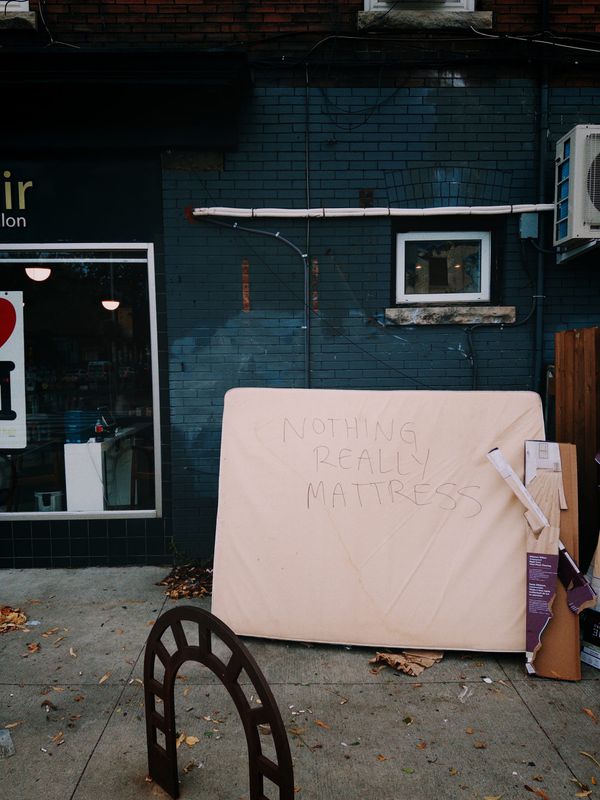
I don’t think that wondering if a song made with AI is good serves any useful function, beyond self-flagellation for daring to be so clever as to consider the offered hand of the devil. A song built with the collected work of thousands who did not consent to their labour being ground to hollow feed has a decent chance to be good, as it was already good when it was made before and before and before that. It was good when it was a thousand other pieces of art, and it was good when it was broken down and fed to the machines piece by piece until its value was determined to be nothing. It will be good when a prompt is typed in that begs it to give just one little morsel. Good as a passable idea. Good as the medium line. Good as what happens when nothing changes. Good as really nothing at all.
Creative industries are already predatory. So few working creatives are surviving off the merit of their labour alone. Often we are supplemented by second, or third or fourth or thousandth jobs. I have seen the argument made that artists would otherwise starve, and so why not use a little generative AI in their work. Just enough to get ahead. Just enough blood drawn to create life for themselves, and then they will stop. The scars left behind will surely heal. As if one’s financial insecurity is enough to warrant worsening the situation. This lack of class consciousness when one’s own immediate interests are in hand.
There is no ethical use of generative AI. The labour of working creatives has already been steadily devalued over the years, and now it has arrived at a place where it only holds financial merit when fed to the machine. Artists who were already facing precarious conditions, whose work has served to create more wealth for those at the top of the tower and little towards the base are placed at further risk by generative AI. A lifeless thing that doesn’t compensate them in any way for their time and talent. To say nothing of the environmental impact of it all. How can we look at these things and wonder if what they make might be good? Listenable even. Who fucking cares? If it is good or great or beyond doesn’t mean anything. If there are no ethics to be had in its creation, then everything beyond that is pointless. Good itself is an ethical epithet. To be good is to have been ethically sound or at the very least neutral, and so how can something ethically wrong be good, unless those same morals were only ever a facade.
I’m not interested in whether a song is good, an entirely subjective truth. I’m interested in how we talk about this technology that specific corners of a media enterprise cannot stop considering. A hot stove that every day tantalizes with the heat of its coiled surface. I am interested in how we push back on those that would say this technology is inevitable, or that it will someday replace us. The questions for someone who uses generative AI become simple. How dare you? Why should anyone trust you have ever made anything worth believing in? Was it all worth it?
We don’t have to roll over for machines used by capital interests, or let them feast on our bones until we are gone. To say it’s inevitable is begging to be replaced and forgotten. Find what you believe in and stand by it. That is the moral soil after all. Having ethics that inform all our little decisions and actions. To be so willing to part with them in order to taste success or giving fawning praise to a fascist technology is more sad than it is curious. How little some people care about themselves and their core beliefs simply because there is something shiny hidden away in the void.
Asking if a song informed in any part by generative AI is good doesn’t move the needle, if anything it only works to bury it. Art is made with the context of creation, informed by the life of whoever works to see it through, built by hands that worked to develop skills over time, with failure and triumph at each new turn. It is a product of its environment, and a marking of time. To be built by a nothing machine makes all that worthless, and the question then should be what beauty was lost in this world in order for some to display a hollow recreation of good.